Updated: February 22, 2026
Everyday Opulence™ is about making intentional choices to increase the pleasure of your day to day. I believe an easy and attainable way to elevate your cooking and eating experience at home is having a great salt system to properly season your food with ease. Here is my guide along with some recommendations you might find helpful.
Cooking Salts
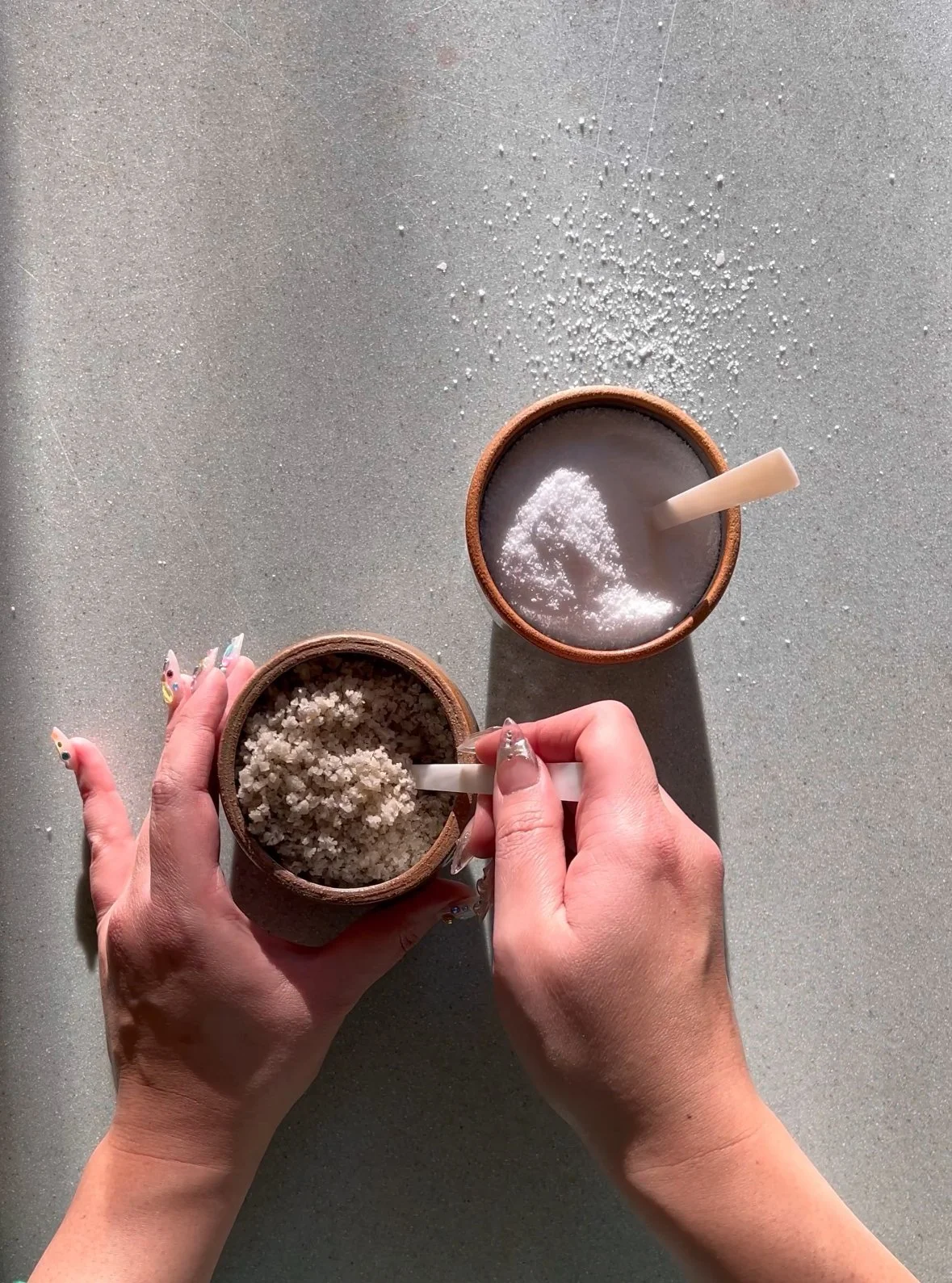
I keep two ceramic bowls and a small tray (that I made) next to my stove for easy access when cooking. I like to keep the bowls on a small tray for easy cleanup. I keep mother of pearl spoons in them for easy scooping.
Diamond Crystal Kosher Salt is the all-purpose salt that I use the most. I love the texture and lightness of this salt and how easily it adheres when seasoning.
I also keep coarse sea salt for salting soups, pasta water, rice, and larger quantities of liquid that need more concentrated salt. Since it’s unrefined, it has a light flavor and a grayish color from the minerals in the salt. I love Gros Sel de Guérande or Celtic sea salt.
Table Salts
As a chef, I try to hit the sweet spot of perfectly seasoned food, but I know my preferred salt level may differ from my diners. How much salt one enjoys is subjective, and I find my palate to be more sensitive to salt. I like to keep salt on my table for guests to add to their dishes. I keep them in gorgeous silver bowls my friend Yasmin bought for me in India.
First is Maldon salt. It’s super flakey and looks like little pyramids if you look closely. I love to top baked goods, salads, and other foods that benefit from a slight shattering crunch of salt.
The second salt I have on my table is Fleur de Sel, an unrefined salt hand-harvested from the top layers of seawater as it evaporates.
Refreshing Salt
I like to regularly clean and refresh my salt bowls—at least once a month. I toss the old salt and then wash and dry the bowls before refilling them with fresh salt.
Seasoning tips
Be judicious. Always taste as you go, and add a little at a time. You can always add more, but fixing something you’ve over-salted is difficult.
Consider your salt density: 1 teaspoon of table salt vs. 1 teaspoon of kosher salt or coarse sea salt will give you varied levels of saltiness.
When following a recipe, make sure you note the type of salt the recipe writer is using. When baking, use a scale. If cooking a savory dish, salt to taste.
When braising or long cooking, you may want to add just the tiniest amount of salt at the beginning, and season near the end of cooking to avoid over salting. When you’re reducing down a liquid or long cooking, salt levels will concentrate as water evaporates from the dish.
Salt is corrosive to metal. I recommend storing salt in wood, glass, plastic, stone, or ceramic. If you want a spoon to scoop your salt, use a mother of pearl or wooden spoon.
Make sure you’re connected with the Le Dinner Party community by subscribing to my newsletter.
You can find more of my recommendations on my storefront where I share items I use and wholeheartedly recommend. As an Amazon Associate, I may earn a small commission if you click through and purchase.